

20+ Years in AV: The Easiest Question That Exposed a Broken Industry Cycle
After more than 20 years working in the AV industry, one of the easiest conversations I ever had with a potential client started with a simple question: "Are you happy with your current AV integrator?" In my experience, the honest answer was almost always "No," and that opened the door wide for them to share everything that was going wrong.
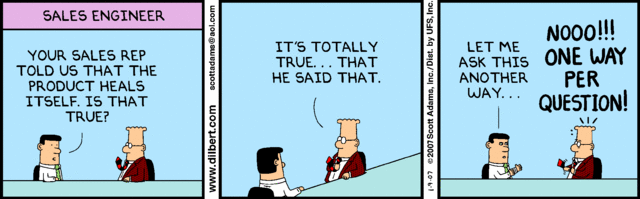
I'd follow up by asking, "What are they doing right?" Usually, the response was a very short list, if there was one at all. Then the real frustrations would come pouring out. I heard the same story over and over: a salesperson comes in strong, treats the client like their top priority, builds an impressive proposal, and makes them feel special during the sales process. The client signs, excited about the partnership. But once the ink is dry, the salesperson moves on to the next deal. That's understandable in a busy industry, but it often leaves the end-user feeling abandoned.
Operations steps in and starts asking questions no one raised during sales. Gaps appear, problems surface, and the project turns into real-time damage control. The AV project manager ends up firefighting in secret, trying to protect margins while keeping things quiet. The pressure falls hard on the delivery team because the salesperson's commission is already locked in at contract signing, based on the original bid, not the final reality. If a mistake slips through or a design issue can't be resolved quietly, a change order shows up. This happens especially often on low-bid projects. At that point, the client has little choice but to pay up, even though they're frustrated and just want the project finished.
When the installation finally wraps, the integrator shifts focus to the next big opportunity. You're handed off to the service department for the warranty period. Those service techs are often the most experienced and talented people in the company, the true elite in my opinion. But they're usually the smallest team, stretched thin. After the first year, support becomes billable, and most integrators own the proprietary code base that runs your entire system. They literally hold the keys to your ecosystem, locking you into a long-term relationship whether you like it or not, often for 5 years or more.
The tough part to swallow is that many companies actually benefit financially from these issues: change orders, extended service contracts, billable fixes. It creates a system where there's less incentive to get everything right the first time. This isn't true for every integrator or every project, but it's a pattern I've seen consistently throughout my career. You can't ignore how easily mistakes can turn into revenue.
That's exactly why I made the shift to being a full-time end-user advocate. I believe clients deserve a different experience: real partnership from the very first conversation, transparent assessments, and designs built for long-term success without the typical bait-and-switch feel.
